
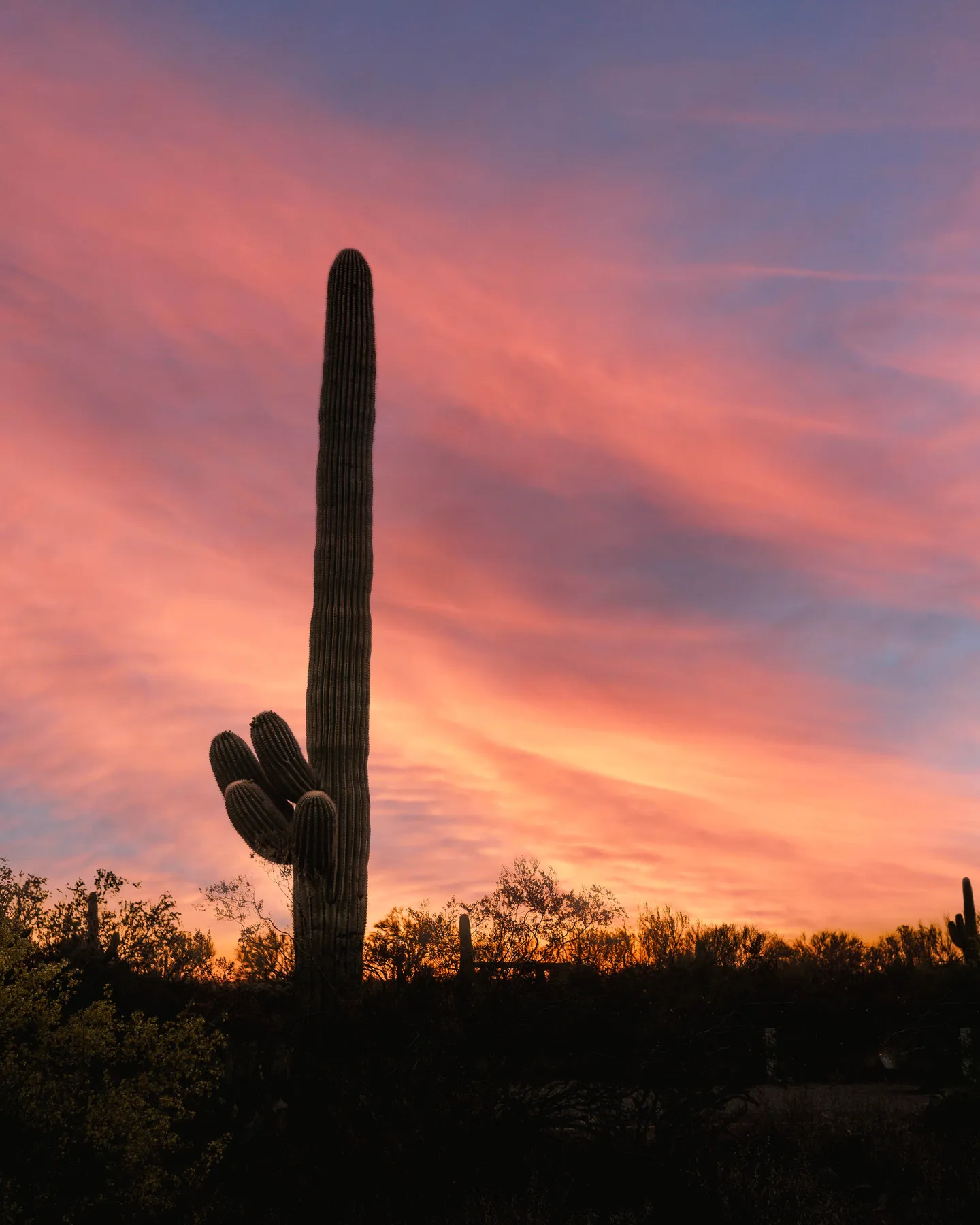


“The desert wears… a veil of mystery. Motionless and silent it seems to be, but it is not. Life is there, strange and wild, and it is not always friendly.”
John C. Van Dyke, The Desert

Welcome to the kingdom of the saguaro, the grand and iconic cactus that has become the enduring symbol of the American West. Saguaro National Park is unique, split into two separate districts that flank the city of Tucson, Arizona. To the east, the Rincon Mountain District offers a vast, mountainous wilderness. To the west, the Tucson Mountain District presents a dense saguaro forest set against smaller, rugged peaks. Together, they protect a vibrant and surprisingly diverse piece of the Sonoran Desert.
For thousands of years, this land has been home to the Tohono O’odham people, for whom the saguaro is a sacred, spiritual figure and a source of sustenance. Recognizing the need to protect these magnificent desert giants from increasing development, President Herbert Hoover established Saguaro National Monument in 1933. The area was elevated to national park status by Congress on October 14, 1994. A visit to this park is an immersion into a landscape that is both harsh and beautiful, alien and yet quintessentially American.


How to Get to Saguaro National Park
Navigating to the Two Districts
Saguaro National Park’s two districts are about a 45-60 minute drive from each other, through the city of Tucson. You will need a car to access both.
- From Phoenix, AZ (to Tucson, approx. 115 miles):
- Take Interstate 10 (I-10) E south towards Tucson. The drive is just under two hours.
- Once in Tucson, follow the specific directions below to either the east or west district.
- To the Rincon Mountain District (East):
- From central Tucson, take Broadway Blvd. or Speedway Blvd. east. Follow signs for Saguaro National Park. The main entrance is at the end of Freeman Road, south of Old Spanish Trail.
- To the Tucson Mountain District (West):
- From central Tucson, take Speedway Blvd. west, which eventually turns into Gates Pass Road. This scenic, winding road leads into the park area. Alternatively, from I-10, take the Avra Valley Road exit and head south to Sandario Road, then turn east on Kinney Road to reach the visitor center.
Important Note: The two districts have different operating hours and different scenic drives. Check the park’s official website before you visit.

Hiking in Saguaro National Park
Trails in the East and West Districts
Hiking is the best way to experience the Sonoran Desert up close. Trails range from short, paved nature walks to strenuous treks into the high country. Always carry more water than you think you will need, especially in the hotter months.
Tucson Mountain District (West)
- Valley View Overlook Trail
- Difficulty: Easy
- Trail Length: 0.8 miles round trip
- Notable Features: This is a must-do trail for a classic Sonoran Desert vista. The short, gently graded dirt path leads to a viewpoint overlooking a valley filled with saguaros and other cacti, with the distant Avra Valley in the background.
- Signal Hill Petroglyphs Trail
- Difficulty: Easy
- Trail Length: 0.5-mile loop
- Notable Features: A short walk leads to the top of a small hill covered with dozens of well-preserved petroglyphs created by the Hohokam people over 800 years ago. It’s a fantastic intersection of natural and cultural history.
Rincon Mountain District (East)
- Mica View Loop Trail
- Difficulty: Easy
- Trail Length: 2-mile loop
- Notable Features: This flat, multi-use trail starts at the Mica View Picnic Area and is perfect for families. It offers wide-open views of the cactus forest and the Rincon Mountains. A short spur trail connects to the Cactus Forest Drive.
- Loma Verde Loop
- Difficulty: Moderate
- Trail Length: 3.8-mile loop
- Notable Features: This trail showcases the incredible plant diversity of the Sonoran Desert. Starting in a dense saguaro forest, the trail loops through washes and past mesquite trees, offering a chance to see a different side of the desert ecosystem.


Lodging and Camping Options for Saguaro National Park
Where to Stay When Visiting the Saguaros
There are no hotels or lodges within either district of Saguaro National Park. All lodging is located in the adjacent city of Tucson. There is also no car or RV camping in the park.
- Backcountry Camping
- The Rincon Mountain District (East) is the only district that offers camping, and it is exclusively primitive, backcountry campsites. A permit is required and must be obtained in advance. These sites require hikes of several miles to reach.
- Distance from Park: You are deep within the park’s wilderness area.
- Hotels in Tucson
- JW Marriott Tucson Starr Pass Resort & Spa: A luxury resort nestled right next to the Tucson Mountain District (West).
- Downtown Tucson Hotels: Numerous options like the AC Hotel Tucson Downtown provide a central base for exploring both park districts and the city.
- Distance from Park: Tucson has hotels bordering both districts and countless options within a 15-30 minute drive.
- RV Parks and Campgrounds
- Gilbert Ray Campground: A Pima County park located very close to the Tucson Mountain District (West), offering scenic sites with electric hookups.
- Catalina State Park: Located north of Tucson, this beautiful park offers well-developed campsites and is about a 45-minute drive from the Rincon Mountain District (East).
- Private RV Parks: Numerous full-service RV parks are available throughout the Tucson area.
Top Things to Do in Saguaro National Park
Beyond the Hiking Trails
The park is perfectly set up for exploration by car or bicycle, offering stunning scenic drives.
- Cactus Forest Drive (East District): This 8-mile paved loop is a highlight of the Rincon Mountain District. It winds through a dense saguaro forest and offers access to numerous trailheads and scenic overlooks. The road is shared by cars and bicycles.
- Bajada Loop Drive (West District): This 6-mile unpaved dirt and gravel loop offers a more rugged experience. It takes you past dense stands of saguaros and provides access to trailheads like Valley View and Signal Hill. High-clearance vehicles are recommended but not required in good weather.
- Visit the Visitor Centers: Each district has a visitor center with excellent exhibits, bookstores, and park rangers to help you plan your day. The Red Hills Visitor Center (West) has a beautiful patio with views, and the Rincon Mountain Visitor Center (East) offers a comprehensive orientation film.
- Bicycling: The paved Cactus Forest Drive in the east district is a very popular and challenging ride for road cyclists.
Weather in Saguaro National Park
A Tale of Two Seasons
The Sonoran Desert climate is defined by extreme heat and mild winters.
- Spring (March – May): Temperatures warm up quickly. This is a beautiful time to visit, as the desert bursts into bloom with wildflowers, and the saguaros begin to flower in late spring.
- Summer (June – August): Dangerously hot. Temperatures consistently soar above 100°F (38°C) and can reach 115°F (46°C). A “monsoon” season brings dramatic and often localized thunderstorms in the late afternoon. Hiking is strongly discouraged during daytime hours.
- Fall (September – November): The heat subsides, and pleasant temperatures return, though it can still be quite warm in September. This is a great time to visit as the summer crowds have not yet arrived.
- Winter (December – February): This is the peak season. Daytime temperatures are mild and pleasant, typically in the 60−70°F (16−21°C) range, perfect for hiking. Nights are chilly.
Wildlife to See in Saguaro National Park
Creatures of the Sonoran Desert
The park protects a fantastic array of wildlife adapted to this unique environment. The best time to see animals is near dawn or dusk.
- Javelina: These pig-like desert mammals are often seen traveling in family groups in the washes and along the scenic drives.
- Gila Monster and Desert Tortoise: These are two of the most iconic but elusive residents. The Gila monster is one of only two venomous lizards in North America. The desert tortoise can live for up to 80 years. Seeing either is a rare treat.
- Coyotes and Bobcats: These predators are common but are often shy and most active in the early morning or evening.
- Birds: The park is a birding paradise. Look for Gambel’s quail scurrying across the road, roadrunners hunting for lizards, and Gila woodpeckers who make their nests in the saguaro cacti.
- Snakes: Many species of snakes, including several types of rattlesnakes, are vital to the ecosystem. They are not aggressive but will defend themselves if threatened.
Best Places to Take Photos in Saguaro National Park
Capturing the Desert Giants
The light and landscape offer incredible photo opportunities, especially at the beginning and end of the day.
- Gates Pass Sunset (West): While technically just outside the park boundary, Gates Pass offers the most famous sunset view in Tucson, overlooking the park’s west district.
- Valley View Overlook (West): The view from the end of this trail is a perfect postcard shot, capturing a dense saguaro forest against a mountain backdrop.
- Bajada Loop Drive (West): The dusty road kicking up in the late afternoon light with saguaros silhouetted against the sky makes for a classic western photograph.
- Signal Hill (West): Photographing the ancient petroglyphs with the vast desert landscape behind them connects the past and present.
- Cactus Forest Drive (East): The sheer number of saguaros close to the road allows you to take powerful photos that emphasize their size and character, especially when backlit by the rising or setting sun.
Things to Do Nearby Saguaro National Park
Exploring Tucson and Southern Arizona
The park’s location means a wealth of world-class attractions are just minutes away.
- Arizona-Sonora Desert Museum: Located adjacent to the west district, this is a must-visit. It’s a world-renowned zoo, natural history museum, and botanical garden all in one, showcasing the life of the Sonoran Desert.
- Old Tucson: A famous movie studio and theme park where hundreds of classic western films and shows were filmed. It is located near the west district.
- Pima Air & Space Museum: One of the world’s largest non-government funded aerospace museums, featuring an incredible collection of historical aircraft.
- Mission San Xavier del Bac: Known as the “White Dove of the Desert,” this stunningly beautiful and historic Spanish Catholic mission is an architectural masterpiece located just south of Tucson.
Wrapping up Saguaro National Park:
Saguaro National Park offers a unique two-for-one experience, showcasing the grandeur of the Sonoran Desert in its distinct eastern and western districts. Here, among the silent, towering giants, you can feel the pulse of a resilient and vibrant ecosystem. Whether you are driving a dusty loop at sunset, marveling at an 800-year-old carving on a rock, or simply standing in awe of a cactus that has stood for 200 years, the park connects you to the deep spirit of the American West. It is a place that proves the desert is not empty, but full of life, history, and a stark, profound beauty.
Resources for Saguaro National Park:
Official Park Website: https://www.nps.gov/sagu/index.htm
Check Out My Socials
TL;DR
Saguaro National Park is split into two districts on opposite sides of Tucson, AZ (Rincon/East and Tucson/West). The main attractions are the giant saguaro cacti and the scenic loop drives in each district. Hiking is best during the mild winter (peak season); summers are dangerously hot. There are no hotels or car camping in the park, so plan to stay in Tucson. The Arizona-Sonora Desert Museum next to the west district is a must-see. The west district is generally better for sunsets and petroglyphs, while the east has a paved loop drive and access to higher-elevation mountain trails.
Get More Info
Get more info from the source at https://www.nps.gov/sagu/index.htm
Check out my other nearby blog reviews of Arizona!
